 Jack
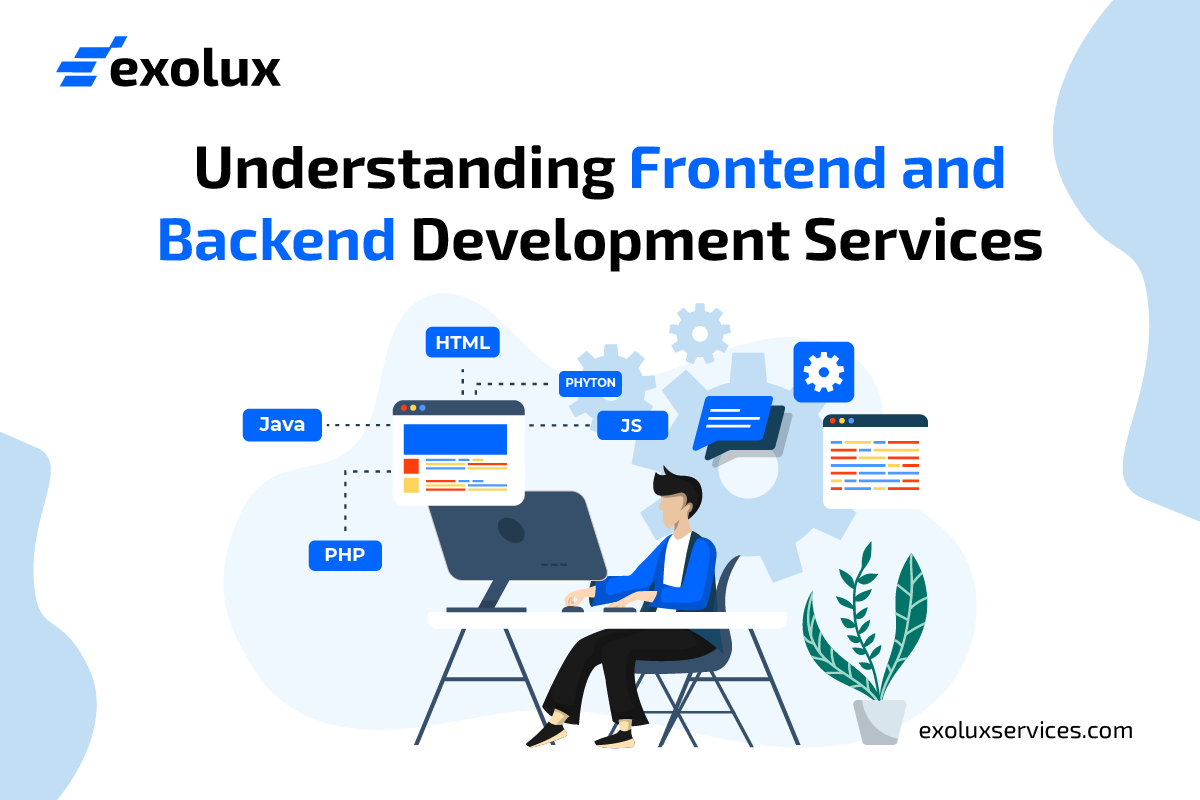
JackBuilding a web app is like running a modern restaurant. When you walk in, you see the beautiful tables, the menu, and the friendly servers. This is the Frontend. Behind the swinging doors, there is a busy kitchen with chefs, ovens, and a pantry full of food. This is the Backend.
To build a successful digital product, you need both. You need a frontend that looks great and a backend that works perfectly. This guide explains these services in simple, active language.
What is Frontend Development?
Frontend development is the “Client-Side.” It is everything a user sees, clicks, and touches. If you change a button’s colour or move a menu, you are doing frontend work.
The Goals of Frontend Services:
- Beauty: Make the app look professional and clean.
- Usability: Ensure the app is easy to navigate.
- Accessibility: Make sure people with disabilities can use the site.
- Speed: Ensure the buttons and animations react instantly.
The Tools of the Trade:
- HTML: The skeleton of the page. It defines where the text and images go.
- CSS: The “paint.” It controlscolourss, fonts, and layouts. Modern developers use tools like Tailwind CSS to make this faster.
- JavaScript: The “brain” of the frontend. It makes the page interactive. When you see a “loading” spinner or a pop-up, that is JavaScript at work.
- Frameworks (React, Vue, Angular): These are like pre-built kits. They help developers build complex screens much faster.
What is Backend Development?
Backend development is the “Server-Side.” Users never see it, but the app cannot live without it. It handles the data, the security, and the logic.
The Goals of Backend Services:
- Storage: Safely store user data (such as names and passwords).
- Logic: Run the “rules” of the app. (Example: “If the user is not logged in, do not show the ‘Settings’ page.”)
- Security: Lock the doors against hackers.
- Communication: Talk to other services, like credit card processors or email systems.
The Tools of the Trade:
- Languages: Developers use Python, Node.js, PHP, or Java to write the rules.
- Databases: This is the filing cabinet. SQL (like PostgreSQL) is for organized data. NoSQL (like MongoDB) is for flexible data.
- APIs: These are the “waiters.” They receive a request from the frontend and return a response from the backend.
- Servers: The actual computers (usually in the cloud, like AWS or Google Cloud) where the code lives.
How They Work Together
Imagine you are logging into an app. Here is how the frontend and backend talk to each other:
- Frontend: You type your email and password. You click “Login.”
- Request: The frontend sends a secret message to the backend.
- Backend: The backend looks in the database. It asks: “Does this password match this email?”
- Database: The database says, “Yes, it matches.”
- Response: The backend sends a “Thumbs Up” message back to the frontend.
- Frontend: The frontend changes your screen to show your personal dashboard.
This entire process happens in less than a second.
Why You Need Professional Services
Some people try to build apps using only one side. This is a mistake. Professional development services ensure that the “Handshake” between the front and back is perfect.
Better Performance
If the backend is slow, the frontend will feel broken. If the frontend is heavy, the user will leave. A professional team balances both. They use Caching to store data and Minification to make files smaller.
Stronger Security
Hackers usually attack the backend. Professional services set up Firewalls and Encryption. They make sure that only the right people can see sensitive data.
Scalability
What happens if 10,000 people join your app tomorrow? A professional backend can “Scale Up.” It automatically adds more server power, so the app doesn’t crash.
Modern Trends in 2026
The world of development is changing fast. Here is what is happening right now:
Full-Stack Development
Many developers are now “Full Stack.” This means they can do both frontend and backend work. This is great for small teams because one person understands the whole system.
Serverless Power
We are moving away from owning “servers.” Instead, we use “Functions.” You only pay for the exact millisecond your code runs. This saves businesses a lot of money.
AI Integration
In 2026, backend services often include AI Models. The backend might use AI to suggest products to a user or to detect a fraudulent credit card charge.
Choosing the Right “Stack”
A “Stack” is the set of tools used to build your app. You must choose one that fits your goals.
| Stack | Best For |
| MERN (React + Node) | Modern, fast web apps. |
| LAMP (PHP + MySQL) | Content sites and simple e-commerce. |
| Python + Django | Data-heavy apps and AI projects. |
| Next.js | High-speed sites that need good SEO. |
The Development Process
When you hire a service, they usually follow these steps:
- Planning: They talk to you about your business. What problem are we solving?
- UI/UX Design: They draw the “Frontend” screens first.
- Database Design: They plan the “Backend” filing system.
- Coding: Developers write code for both sides.
- Testing: They try to “break” the app to find bugs.
- Deployment: They launch the app to the world.
Conclusion
Frontend and backend development are two sides of the same coin. The frontend captures the user’s attention, and the backend provides the substance and power.
If you want a successful app, do not ignore either side. Use a modern stack, prioritise security, and ensure your team communicates well. When the “Kitchen” and the “Dining Room” work together, your users get a 5-star experience.